| Chemical Composition and Energy Values of the foods per 100g of edible part | ||
| Edible part | % | 59 |
| Water | g. | 93,2 |
| Proteins | g. | 1,2 |
| Lipids | g. | tr |
| Carbohydrates | g. | 1 |
| Starch | g. | 0 |
CULTIVATION PERIOD:


CULTIVATION TECHNIQUES:
Integrated crop production in open field.
DESCRIPTION:
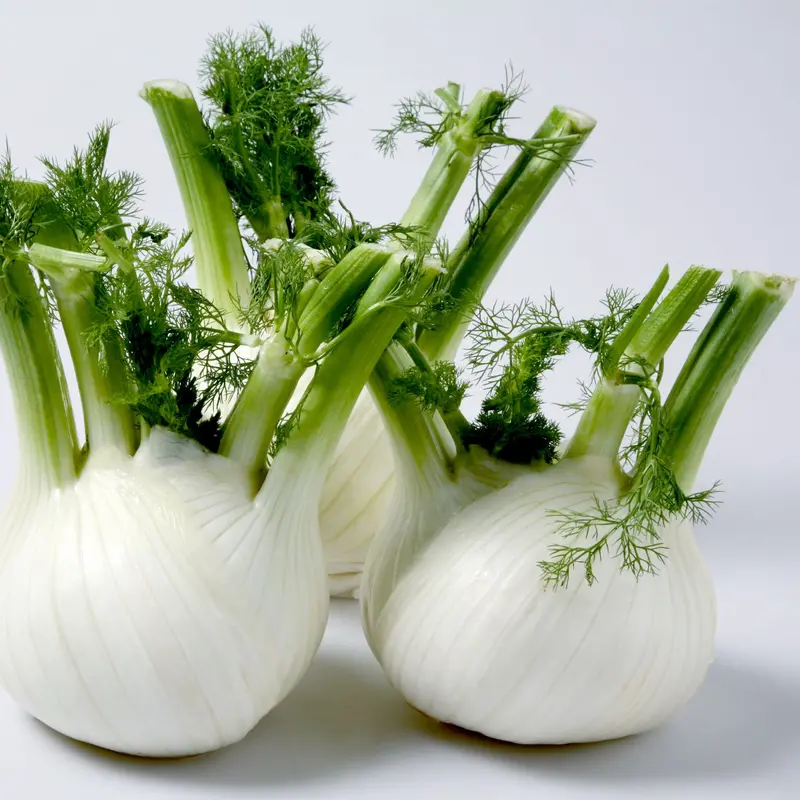
Due to its properties, it is considered a super-food. It is an herbaceous plant cultivated for its heart, which is formed by a series of fleshy white sheaths each united around the stem.
HEALTH ADVANTAGES:
Fennel has a long tradition as a medicinal plant in Mediterranean areas and herbal medicine recognises its numerous properties:
· It is an intestinal antispasmodic that alleviates intestinal spasms and cramps.
· It is a carminative that helps expel excess gas.
· It is a stomachic that tones and strengthens the stomach.
· It is an anodyne that combats and alleviates pain.
· It is diuretic and helps combat cellulite, obesity and excess weight. Furthermore, fennel contains substances called “phyto-oestrogens” that make it useful in treating many female disorders, in particular the menopause. It contains 93.2% water, proteins, carbohydrates, potassium, calcium, sodium and phosphorous, vitamin A, C and E and folic acid. It does not contain fats. Thanks to its low calorie content it is particularly suited for use in weight-loss diets.
USES IN THE KITCHEN:
Fennel can be eaten raw, either on its own, in mixed salads or with a dip. Alternatively, it can be cooked au gratin in the oven or steamed or boiled and served with butter. It can also be used to prepare juices.
CULTIVATION TECHNIQUES:
Integrated crop production in open field.
DESCRIPTION:
Due to its properties, it is considered a super-food. It is an herbaceous plant cultivated for its heart, which is formed by a series of fleshy white sheaths each united around the stem.
HEALTH ADVANTAGES:
Fennel has a long tradition as a medicinal plant in Mediterranean areas and herbal medicine recognises its numerous properties:
· It is an intestinal antispasmodic that alleviates intestinal spasms and cramps.
· It is a carminative that helps expel excess gas.
· It is a stomachic that tones and strengthens the stomach.
· It is an anodyne that combats and alleviates pain.
· It is diuretic and helps combat cellulite, obesity and excess weight. Furthermore, fennel contains substances called “phyto-oestrogens” that make it useful in treating many female disorders, in particular the menopause. It contains 93.2% water, proteins, carbohydrates, potassium, calcium, sodium and phosphorous, vitamin A, C and E and folic acid. It does not contain fats. Thanks to its low calorie content it is particularly suited for use in weight-loss diets.
USES IN THE KITCHEN:
Fennel can be eaten raw, either on its own, in mixed salads or with a dip. Alternatively, it can be cooked au gratin in the oven or steamed or boiled and served with butter. It can also be used to prepare juices.